Revocation for Non-Use and the Testarossa Decision
Do second-hand sales and archive marks count as genuine use? What the General Court's Testarossa judgment changes for revocation on the ground of non-use.
By · Aysu K. Ergin
As we all know, Article 26 of Industrial Property Code no. 6769 provides: “Where the trademark has been put to genuine use in respect of the goods or services for which it is registered, between the expiry of the five-year period and the date on which the revocation request was submitted to the Office, revocation requests under subparagraph (a) of the first paragraph shall be rejected. Where use has taken place in anticipation of a revocation request being made, use occurring within the three months preceding the submission of the request to the Office shall be disregarded.”
Why Second-Hand and Archive Marks Are on the Agenda
Second-hand sales and archive marks and emblems have come onto the agenda over the past two years. In early 2025, a vintage Roberto Cavalli shirt might have been the item our mothers most wanted to be rid of, while proof of use can become the very thing million-dollar trademark files depend on. But is that really how it works?
Particularly in fashion and textiles, as archive and hard-to-find products came up again and again, a new movement was being called for against stylists on the newer blogs. As matters stand today, is Article 26 of the IPC sensible and fair for every trademark? For some marks, is becoming goods that are no longer renewed and are left entirely to the second-hand market not in fact what strengthens them? Might the goods and services bearing certain marks not become strong, archival marks precisely because they cannot be found and are not used?
On authenticity and traceability: Customization and the Fight Against Counterfeiting.
Why should SONY GROUP CORPORATION use the “WALKMAN” mark today? Why should FERRARI S.P.A. use the TESTAROSSA mark?
Today, without wanting anything from the products made by LC WAIKIKI MAĞAZACILIK HİZMETLERİ TİCARET ANONİM ŞİRKETİ, I found myself searching for hard-to-find, iconic items bearing the “LC Waikiki Monkey” ( ) emblem that reminds me of my childhood, and these questions came to mind.
The answer to our questions arrived with a judgment handed down last summer.
The Testarossa Judgment
Ferrari SpA brought an action for annulment of the decision of the Fifth Board of Appeal of the European Union Intellectual Property Office of 29 August 2023 (Joined Cases R 334/2017-5 and R 343/2017-5), seeking to keep the registration of its sign “TESTAROSSA” alive. The problem turned precisely on the fact that Ferrari was not using the goods and services bearing the TESTAROSSA mark “continuously, intensively and genuinely”. The General Court gave judgment on 2 July 2025.
Taking into account the mark’s function of indicating origin, the General Court of the European Union found in Ferrari’s favour, examined a consent to use given impliedly by Ferrari, and in doing so altered the settled practice on revocation for non-use.
The Court’s Reasoning
The case was decided by the Eighth Chamber, Extended Composition (ECLI:EU:T:2025:659). English was the language of the case, so the passages below are the Court’s own words rather than a translation.
The Court first draws the limit of implied consent (paragraph 38):
It must however be stated that, as EUIPO has observed, in the specific context of the use of a trade mark in respect of second-hand goods, such implied consent cannot be inferred from the mere fact that the proprietor was aware of the use of the mark by a third party and did not oppose it. The consent of the proprietor is not legally required in order for a third party to use the mark in respect of second-hand goods. However, in order for implied consent to be established in that specific context, the proprietor must also have been involved in the use of the mark by third parties.
That final sentence is the test: involvement, not mere silence. And on the facts, Ferrari was involved (paragraph 41):
It follows that the use of the contested mark relied on by the applicant is not use by some unrelated third party, but use by authorised dealers and distributors with which the applicant has economic and contractual links, which is not disputed in the present case.
The Court then applies case-law it is careful to present as settled — it “has had occasion to hold” that use of a production company’s mark by an economically linked distribution company counts as use with the proprietor’s consent under Article 15(2) of Regulation No 207/2009 (paragraph 42) — and extends it to authorised distributors (paragraph 43):
Those considerations apply mutatis mutandis where a trade mark of a production company, such as the contested mark, is used by a distribution company authorised by the proprietor of that mark, in so far as such authorisation establishes a link between those two companies which, in the absence of any indication to the contrary, presupposes that the proprietor of the trade mark has authorised that approved dealer or distributor, albeit impliedly, to use its trade marks in the course of its economic activities on the market.
What makes the judgment worth reading is the market reasoning that follows (paragraph 44):
In addition, in accordance with the practices regarded as warranted in the second-hand car sector, a distinction must be drawn between sales of second-hand cars by an independent third party having no connection with the manufacturer of those cars, and sales by a dealer or distributor authorised by that manufacturer. That is all the more true when, as in the present case, the second-hand cars in question are vintage collectible luxury high-end models, which are particularly esteemed and valued by collectors.
And the conclusion (paragraph 45):
Accordingly, contrary to the view taken by the Board of Appeal, it must be held that the fact that a second-hand car bearing the TESTAROSSA mark is sold by a dealer or distributor authorised by the proprietor of the contested mark constitutes an indication that the sale is conducted with the consent, albeit implied, of the proprietor.
The General Court annulled the Board of Appeal’s decision and ordered EUIPO and the intervener to pay Ferrari’s costs. That is the whole of the operative part: the Court does not itself declare the mark used, so the matter returns to the Board of Appeal to be decided again on this reading.
From the Perspective of Turkish Practice
I would like to draw your attention to this approach, the like of which I have not yet come across in our own case law. Indeed, in my view, some trademarks genuinely do grow stronger by not being used by their proprietor.
On how revocation requests work through the administrative route in Türkiye: Administrative Trademark Revocation: Where Things Stand.
Here are a few examples that became advertising material, and grew stronger, by “coming back” — when they ought to have grown stronger by disappearing:
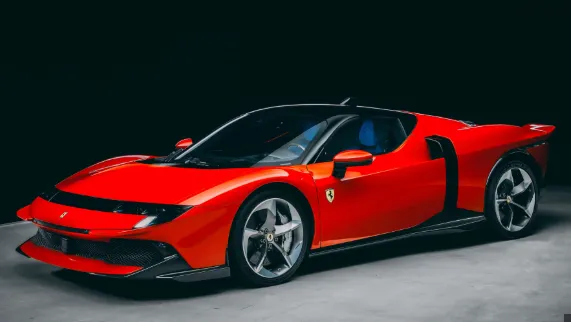
FERRARI - TESTAROSSA
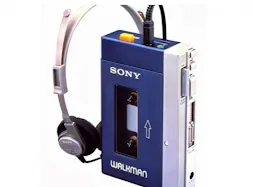
SONY - WALKMAN
LC WAIKIKI
The Judgment
For the full judgment: