Copad v. Dior: The Limits of Micro-Management in Licensing
How much control does a proprietor keep after granting a licence? The CJEU's Copad v. Dior ruling draws the line between micro-management and brand management.
By · Aysu K. Ergin
Introduction
One of the most striking and inspiring features of intellectual property law is that it holds examples extraordinarily entangled with human psychology. In some situations, intervening despite having granted authority and trust amounts to “micro-management”, while at other times maintaining those same safeguards is nothing more than ordinary “brand management”. Drawing that line brings one question to mind: when a proprietor permits someone else to use its trademark, how much control should it keep?
On how luxury retail built this image in the first place: Architects of the Industry #1: Le Bon Marché.
We see a reflection of this, through the lens of trademark rights, in the judgment of the Court of Justice of the European Union (the “CJEU”) of 23 April 2009 in case C-59/08, Copad v. Dior. The dispute in that case rests on a conflict between the exhaustion doctrine, which derives from the proprietor’s own consent, and the duty of care the proprietor must uphold under the licence agreement. The dispute shows that keeping control is sometimes not merely a preference or “micro-management”, but part of the very mechanism that gives the right its meaning.
Articles 7 and 8 of the Directive
The legislation at issue in the judgment is the First Council Directive 89/104/EEC of 21 December 1988, the original text behind what is today Directive (EU) 2015/2436 of the European Parliament and of the Council of 16 December 2015 to approximate the laws of the Member States relating to trade marks.
In the original text of the Directive, Article 7 corresponds to the exhaustion doctrine, while Article 8 governs the licensor proprietor’s need to take measures to protect the quality function.
Under Article 7 of the Directive, by virtue of the principle of exhaustion of trademark rights, the proprietor may not, as a rule, prevent the subsequent use and trade of branded goods put on the market in the Community by it or with its consent. The exception, however, is the existence of legitimate reasons, in particular where the condition of the goods is changed or impaired after they have been put on the market. Where legitimate reasons exist, the proprietor may oppose further commercialisation of the goods.
Under Article 8 of the Directive, on the other hand, a trademark may be licensed, exclusively or non-exclusively, for all or some of the goods or services for which it is registered and for all or part of the territory concerned. The proprietor may invoke the rights conferred by the trademark against a licensee who contravenes any provision of the licence agreement with regard to its duration, the manner in which the trademark may be used, the goods or services covered by the licence, the territory of use or the quality of the goods or services.
The Copad v. Dior Dispute
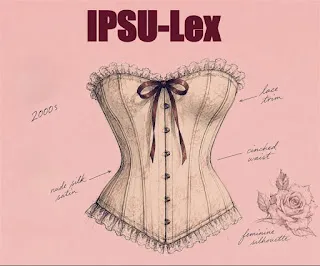
The dispute arises out of a licence agreement signed on 17 May 2000 between Christian Dior Couture SA (“Dior”) and Société Industrielle Lingerie (“SIL”) for the manufacture and distribution of corsetry goods bearing the “CHRISTIAN DIOR” mark. Under paragraph 5 and clause 8.2 of the agreement, the relevant provision reads:
“In order to maintain the repute and prestige of the trade mark the licensee agrees not to sell to wholesalers, buyers’ collectives, discount stores, mail order companies, door-to-door sales companies or companies selling within private houses without prior written agreement from the licensor, and must take all necessary measures to ensure that its distributors or retailers comply with that rule.”
The agreement thus prohibited SIL from selling the goods to certain distribution channels without Dior’s prior written consent, in order to maintain the repute and prestige of the CHRISTIAN DIOR mark. One day, however, owing to economic difficulties, SIL asked Dior for permission to sell goods bearing the CHRISTIAN DIOR mark outside that defined distribution network, and Dior refused. Despite the refusal, SIL sold goods bearing the CHRISTIAN DIOR mark to Copad, a company operating in discount retail.
The conflict that arises, then, is this: to what extent may a licensor proprietor, in the face of the measures it must take to protect its mark’s quality function, intervene with a licensee to whom it has granted a right of use with its own consent?
In the action Dior brought before the Tribunal de grande instance de Bobigny, it was held that the sale by SIL to the discount retailer Copad did not constitute trademark infringement and could at most give rise to contractual liability.
Dior then appealed that first-instance decision to the Cour d’appel de Paris. The court dismissed Dior’s appeal, holding that the distribution condition in the licence agreement between Dior and SIL was not one of the contractual provisions under Article 8(2) of the Directive by which a proprietor may invoke its trademark rights against a licensee, and that the sales made by SIL therefore did not constitute infringement of the trademark. At the same time, the court concluded that SIL’s sale of those goods to discount stores did not cause Dior’s trademark rights to be exhausted under Article 7(1) of the Directive either.
Copad then challenged the decision on the ground that Dior’s trademark rights had been exhausted under Article 7(1) of the Directive, while Dior cross-appealed on the ground that the acts of SIL and Copad constituted infringement of its trademark rights.
The CJEU’s Assessment
The CJEU begins by recalling its settled case law, referring to the essential function of a trademark as guaranteeing the identity of the goods or services bearing it, by enabling the consumer to distinguish them, without any possibility of confusion, from those with another origin.
On that basis, according to the CJEU, in order for a trademark to perform its essential function, it must offer a guarantee that all the goods or services bearing it have been manufactured or supplied under the control of a single undertaking or proprietor responsible for their quality. On the Court’s assessment, therefore, control is part of the whole structure behind the guarantee the mark gives the consumer, and part of what gives the mark its value.
The most critical part of this judgment is the CJEU’s assessment that the “quality function” is not confined to the material characteristics of the product, but can also be secured through the prestige the mark carries. The product’s allure, its prestigious image and the elements that give it its “aura of luxury” can also form part of quality. For the Court, that “aura of luxury” is one of the essential elements enabling consumers to distinguish those goods from similar ones. Damage to that aura of luxury may therefore affect the quality of the goods themselves, and this must be assessed according to the circumstances of each dispute.
On the other question referred, the Court revisits the proprietor’s scope for control through the exhaustion doctrine.
Article 8(2) of the Directive lists the contractual provisions by which a proprietor may invoke its trademark rights against a licensee. Starting from that provision, the Court specifically determined that the list in Article 8(2) is exhaustive. One of its reasons derives from the wording of the Directive: while Article 7(2), on exhaustion, uses the illustrative term “especially”, no such term appears in Article 8(2), and the categories in Article 8(2) are accordingly exhaustive rather than illustrative. In other words, the matters a proprietor may guard against when granting a licence are set out exhaustively in Article 8(2).
It follows that not every breach of contract by a licensee automatically entitles the proprietor to invoke its trademark rights. But where the contractual provision breached falls within one of the categories listed in Article 8(2) of the Directive, the licensee’s act of putting the goods on the market may, in certain circumstances, be regarded as having taken place without the proprietor’s consent, and the exhaustion defence may be set aside.
Conclusion
Ultimately, where the licensee’s activities damage “the repute of the trademark”, that falls, under Article 8(2) of the Directive, within the proprietor’s sphere of control through the quality function, and constitutes an exception to the principle of exhaustion. The question, then, is not merely one of exercising control, but of controlling a legally meaningful right through a legally meaningful mechanism.
On another side of protecting a luxury brand’s image: Customization and the Fight Against Counterfeiting.
On the Court’s assessment, even where the contract between licensee and proprietor has not been expressly drafted along the exhaustive list, the exception under the legislation will come into play where the prestige and repute of a luxury mark and the quality function secured by that very mark for the goods and services offered under it are impaired, and the proprietor will be justified in continuing its control mechanism and taking measures against the licensee.
The assessment in the judgment brings to mind Article 24/4 of the Turkish Industrial Property Code: “The licensor shall take measures to ensure the quality of the goods to be manufactured or the services to be supplied by the licensee.”
Sources
-First Council Directive 89/104/EEC of 21 December 1988: https://eur-lex.europa.eu/eli/dir/1989/104/oj/eng - Directive (EU) 2015/2436 of the European Parliament and of the Council of 16 December 2015 to approximate the laws of the Member States relating to trade marks: https://eur-lex.europa.eu/legal-content/EN/TXT/?uri=CELEX%3A02015L2436-20151223 -For the text of the judgment: https://eur-lex.europa.eu/legal-content/EN/TXT/?uri=CELEX%3A62008CJ0059